Belt conveyor
A continuous belt can support cartons, containers and less rigid packs. Belt width, surface, guides, speed control and transfer gaps must suit the product.
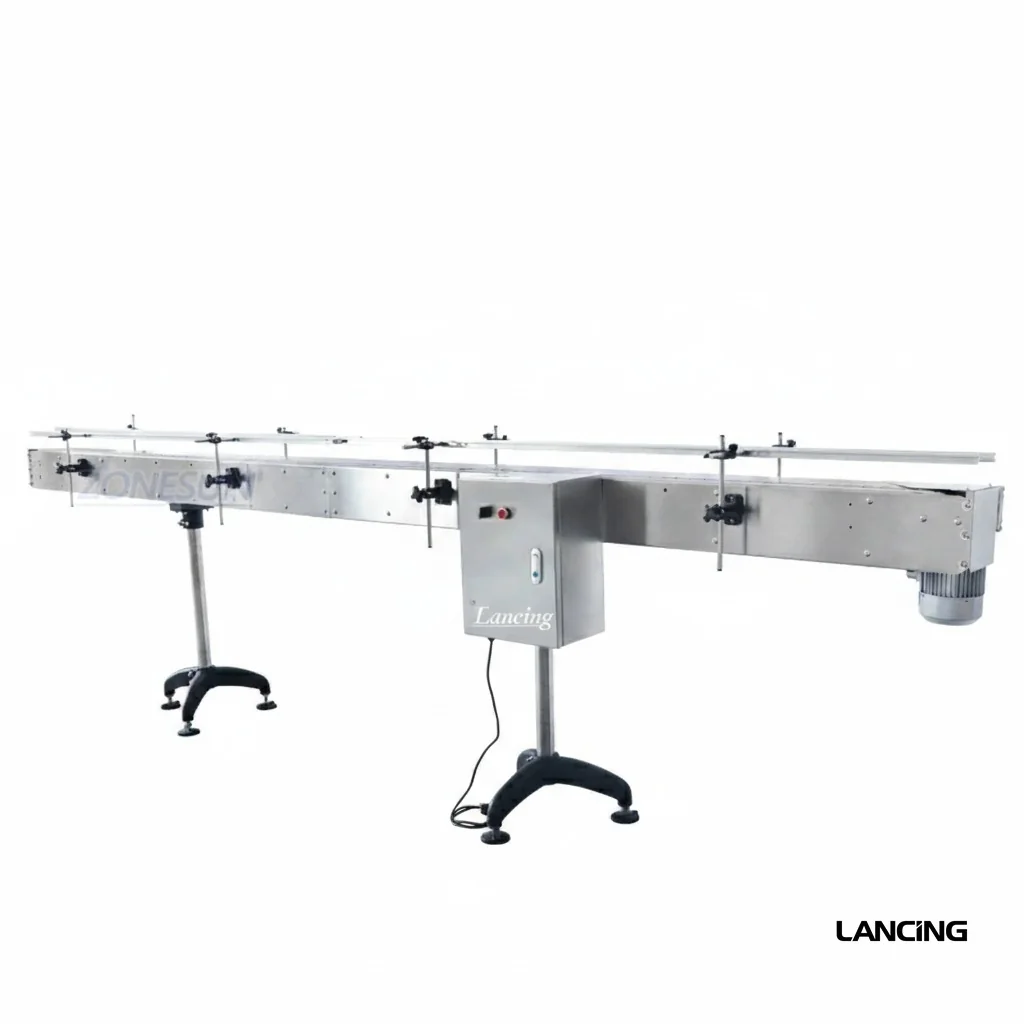
Temporary product movement
Belt, roller and gravity conveyor routes for compatible packs and short-term projects—specified around the product, process, layout, speed and interfaces.
Check conveyor availabilityQuick answer
Yes. Packaging conveyor hire can bridge machines, create an inspection or coding station, support a manual packing area or add temporary capacity. These are product-handling conveyors for packs such as bottles, jars, bags and cartons—not construction conveyors for rubble or bulk materials.
Product stability and transfers matter as much as conveyor length. A pack that is tall, soft, very small or irregular may need guides, a particular belt surface or a controlled infeed.
Conveyor routes
A continuous belt can support cartons, containers and less rigid packs. Belt width, surface, guides, speed control and transfer gaps must suit the product.
Powered rollers can move suitable rigid, flat-based cases and totes. Roller pitch must support the smallest product throughout its travel.
Gravity rollers or temporary accumulation can create a simple buffer or packing lane where gradient, product base, operator reach and control are acceptable.
Application matching
A temporary conveyor must move the product consistently and connect safely with the surrounding process.
| Production detail | Why it matters |
|---|---|
| Product footprint | Length, width, base shape, centre of gravity and weight determine belt width, guides and roller pitch. |
| Speed and spacing | Products per minute, pitch and accumulation affect motor, control and interface requirements. |
| Length and height | Overall line length, working height, adjustment range and operator access must fit the available area. |
| Transfers | Small packs can stall or tip at gaps between conveyors, coders, fillers and labellers. |
| Controls | Variable speed, start/stop, sensors, machine signals and emergency stops need a defined control approach. |
| Environment | Cleaning method, product exposure, guarding, power and dry or wet conditions affect suitability. |
Temporary line layout
A conveyor can link filling, capping, labelling, coding, sealing or wrapping equipment, but it does not automatically make separate machines operate as one line. Heights, controls, speed ranges, transfers, product detection and emergency-stop strategy all need review.
For larger projects, describe the complete flow from empty pack to finished case. That allows the conveyor requirement to be considered as part of a temporary packaging line.
Plan a temporary linePackaging conveyor questions
Potentially. Share the smallest and largest product, base dimensions, weight, speed and transfer points. Tall bottles and small packs may need additional control or guiding.
It may be possible if working heights, line direction, speed ranges, control signals, safety systems and transfer gaps are compatible. Site measurements are normally essential.
Variable-speed operation may be available depending on the equipment. State the minimum and maximum required line speed and whether another machine must control or stop the conveyor.
No. This page concerns conveyors used to move packs and products in packaging or production environments, not heavy-duty construction or bulk-material conveyors.
Request a conveyor review
Include dimensions, working heights, photographs and the machines at each transfer.